

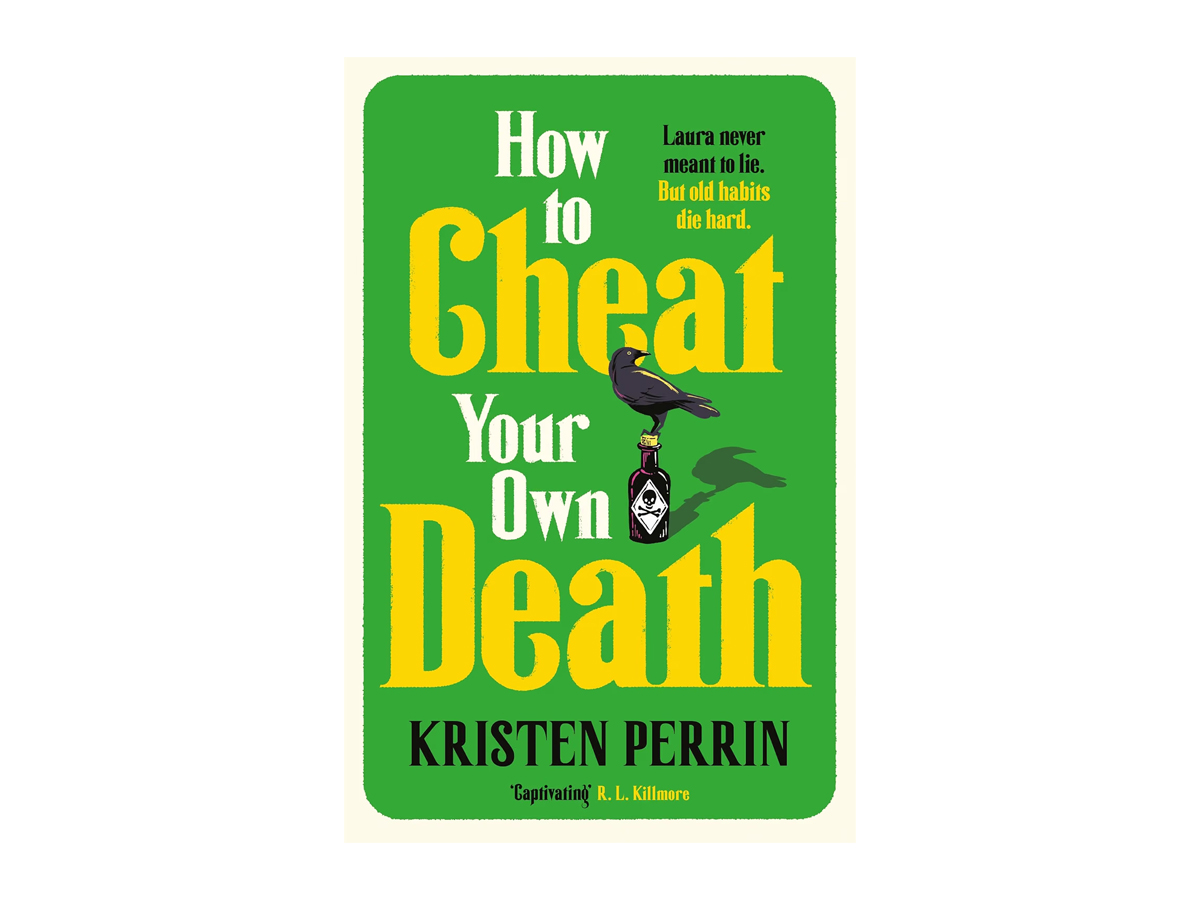
I have read the first 2 Castle Knoll books, having encountered this writer soon after the first book was published at Granite Noir, so I knew roughly what to expect, but I still wasn’t quite prepared for how much this third instalment manages to feel new whilst adding more onto the story. Annie Adams heads to London expecting a nice visit with her mum Laura and instead trips over a body. Fliss, a young artist Laura had taken under her wing is killed in a way that’s horribly specific: her heart surgically removed.
What makes this series work for me is the fact it reveals this intricate back story of Annie’s family and the structure of this book, like the previous ones, is the dual-timeline structure. We’re not just chasing a present-day killer, we’re also dropping back into 1960s Soho through the journals of Annie’s late Great Aunt Frances, whose own close friend died the exact same way decades earlier. Perrin’s clearly having fun contrasting the two Londons. It’s a lovely contrast between the grit and danger of Soho against the polished galleries of West London now, and the case-within-a-case structure gives the book a real sense of momentum, because you’re constantly wondering how the two threads are going to knot together.
Annie herself has grown into a properly likeable amateur sleuth at this point, sharp without being smug about it, and there’s a nice tension running underneath the plot once it becomes clear Laura isn’t just a witness but a target, without giving much away she’s been keeping things from Annie all along. That mother-daughter friction gives the mystery some emotional resonance, and in the dual timeline you feel both Annie and her Great Aunt aren’t quite so comfortable moving in the circles they have to in order to try to solve the case.
Add into the narrative, more history from within Annie’s past and its really becoming a more fleshed out and interesting saga in every book, as well as her budding romance with Rowan Crane.
If you’ve enjoyed the Castle Knoll books so far, or you like your mysteries with a decades-spanning hook (think Richard Osman with a bit more bite), this is well worth picking up.